

When a lease renewal comes around, it’s natural for a property owner to ask: “What could my property rent for today?”
There’s another question worth asking alongside it:
“What would it cost to replace the tenant I already have?”
An advertised rent is only part of the picture. Vacancy, cleaning, repairs, marketing, and finding the next qualified renter all affect what an owner actually keeps.
At Metcalf Property Management, we believe renewal decisions deserve a look at that whole picture—including the value of a tenant who pays reliably, cares for the home, and communicates when something needs attention.
Key Takeaways
Vacancy and turnover expenses can outweigh the benefit of a higher monthly rent.
Maintenance and communication both influence the tenant experience.
Renewal decisions should consider comparable rentals, ownership costs, property condition, and the existing tenancy.
Thoughtful management can help reduce avoidable turnover, even though some moves are simply part of life.
California rental requirements depend on the property, its location, and the applicable protections.
What Does Losing a Good Tenant Actually Cost?
A move-out can create several expenses at once:
Lost rental income while the property is vacant
Cleaning and necessary work to prepare the home
Marketing, showings, and tenant placement
Time spent coordinating vendors and the next tenancy
The amount varies from one property to another. A home that needs a quick cleaning has a very different turnover budget from one that needs flooring, painting, and several repairs.
That is why an owner’s actual numbers are more useful than a single industry average.
Consider this hypothetical example:
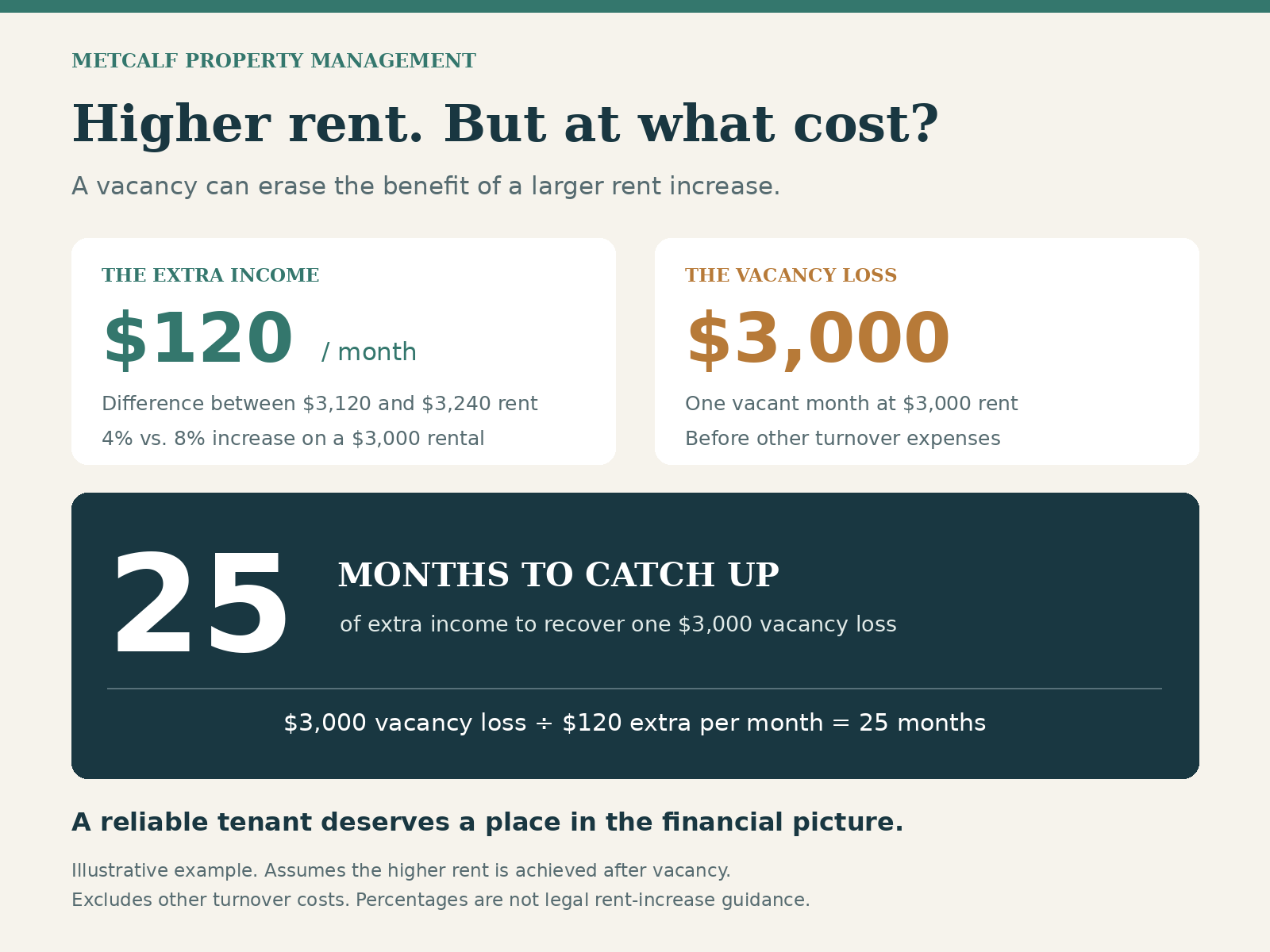
The difference between the two renewal options is $120 per month, or $1,440 per year.
If pursuing the higher amount results in a move-out and one vacant month, approximately $3,000 in lost rent would take 25 months of that extra $120 to recover—before accounting for other turnover expenses.
A larger increase does not automatically cause a tenant to leave, and a smaller one does not guarantee a renewal. The point is to weigh the potential additional income against the cost and likelihood of turnover.
Sometimes an adjustment makes financial sense. Sometimes keeping a reliable tenant at a slightly lower rent produces a better outcome. The numbers deserve a closer look.
Maintenance Matters to the Long-Term Relationship
Maintenance is an important part of the rental experience—and one of the more complicated parts of managing a property.
A repair may involve coordinating the tenant’s availability, identifying the right vendor, obtaining owner approval when appropriate, and waiting for parts or additional diagnosis. Those steps take work behind the scenes, while the tenant is living with the inconvenience.
Clear communication helps. Acknowledging a concern, explaining the next step, and sharing updates when information becomes available can make the process easier to navigate.
For owners, planning for maintenance expenses and responding promptly when an approval is needed can also help move work forward. For tenants, reporting problems early and providing useful details can help identify what needs attention.
These practical steps support the repair process; urgent conditions still require prompt attention.
The goal is to keep improving how repairs are handled, with attention to both the property’s needs and the people who call it home.
For practical tips on caring for one of a home’s most expensive systems, read our HVAC advice from Valencia Air.
Make Communication Clear—and Respect the Tenant’s Home
Tenants benefit from knowing how to submit a routine maintenance request, how to report an emergency, and whom to contact with a lease question. Owners benefit when expectations and responsibilities are clear, too.
When work is scheduled, explaining what will happen and how it may affect the household can help everyone prepare.
Respect for privacy matters as well. Under California Civil Code §1954, entry must have a legally permitted basis and follow the applicable notice and timing requirements. Giving notice alone does not authorize entry for any purpose.
For an owner, the property is an investment. For the tenant, it is home. Good management keeps both perspectives in mind.
Approach Rent Increases With the Whole Picture
Ownership expenses change, and rent adjustments can be necessary. Keeping a reliable tenant does not mean freezing rent indefinitely.
Before deciding on a renewal amount, consider:
What comparable homes are currently offering
How the property’s condition and amenities compare
The tenant’s payment history and care of the home
Likely vacancy and turnover expenses
Ownership costs and longer-term plans
Applicable rent limits and notice requirements
A percentage increase can sound modest on paper and still represent a meaningful monthly expense for a household. Communicating proposed terms clearly and with time to consider them gives everyone a better opportunity to plan.
The goal is a financially sound decision for the property. That requires looking beyond the highest asking rent in the neighborhood to consider what comparable homes offer and what a change in tenancy could cost.
Choose Improvements That Make Daily Life Better
A thoughtful improvement can give a long-term tenant another reason to enjoy the home. It does not need to be a full renovation.
Depending on the property, useful options might include:
Improving lighting
Updating an aging ceiling fan
Offering professional carpet cleaning where appropriate
Refreshing tired paint or finishes
Updating older fixtures that still function but could work better for the household
Start by finding out what would actually be useful. The upgrade an owner notices first may not be the one the tenant would value most.
Evaluate the cost, condition of the home, and likely long-term benefit before making an offer. Required repairs should be handled as obligations, independently of any renewal incentive.
Start Renewal Conversations Early
Beginning renewal discussions roughly 60 to 90 days before a fixed-term lease ends can give owners and tenants time to consider their plans.
That conversation may reveal an unresolved concern, a question about proposed terms, or a move the tenant was already planning. It can also give an owner more time to prepare if the home will become available.
Early discussions support planning; they do not replace any legally required notices or deadlines.
Some tenants will leave because they are buying a home, changing jobs, or need different space. Those moves are not necessarily a reflection of the property or its management.
Retention efforts are most useful when they address the problems that can be resolved.
How Professional Property Management Supports Retention
Tenant retention involves work throughout the tenancy: coordinating maintenance, communicating with residents, reviewing comparable rentals, and helping owners evaluate renewal options.
It also requires understanding which rules apply.
California’s Tenant Protection Act limits rent increases for many properties, while some properties qualify for exemptions and others are subject to local protections. A single-family home’s exemption should not be assumed based on property type or lease wording alone; eligibility and notice requirements matter.
Our guide explains more about AB 1482 and LA County’s rental rules.
Professional management brings these considerations together, helping owners make informed decisions while working to improve the tenant experience.
Common Questions About Tenant Retention
Should I avoid raising rent for a good tenant?
Not necessarily. A reasonable adjustment may support the property’s long-term financial health. Evaluate current rent, comparable homes, expenses, the tenancy, and applicable legal requirements before deciding.
Do renewal incentives have to be expensive?
No. A useful service or modest improvement may be appreciated. Consider what the tenant actually values and whether the cost makes sense for the property. Incentives should be administered consistently and in compliance with fair housing requirements.
Does a tenant moving out mean something went wrong?
No. Even happy tenants move. The useful question is whether a preventable issue contributed—and whether there is something to improve for the next tenancy.
The MPM Takeaway
A reliable tenant brings value that does not always appear in a rent comparison.
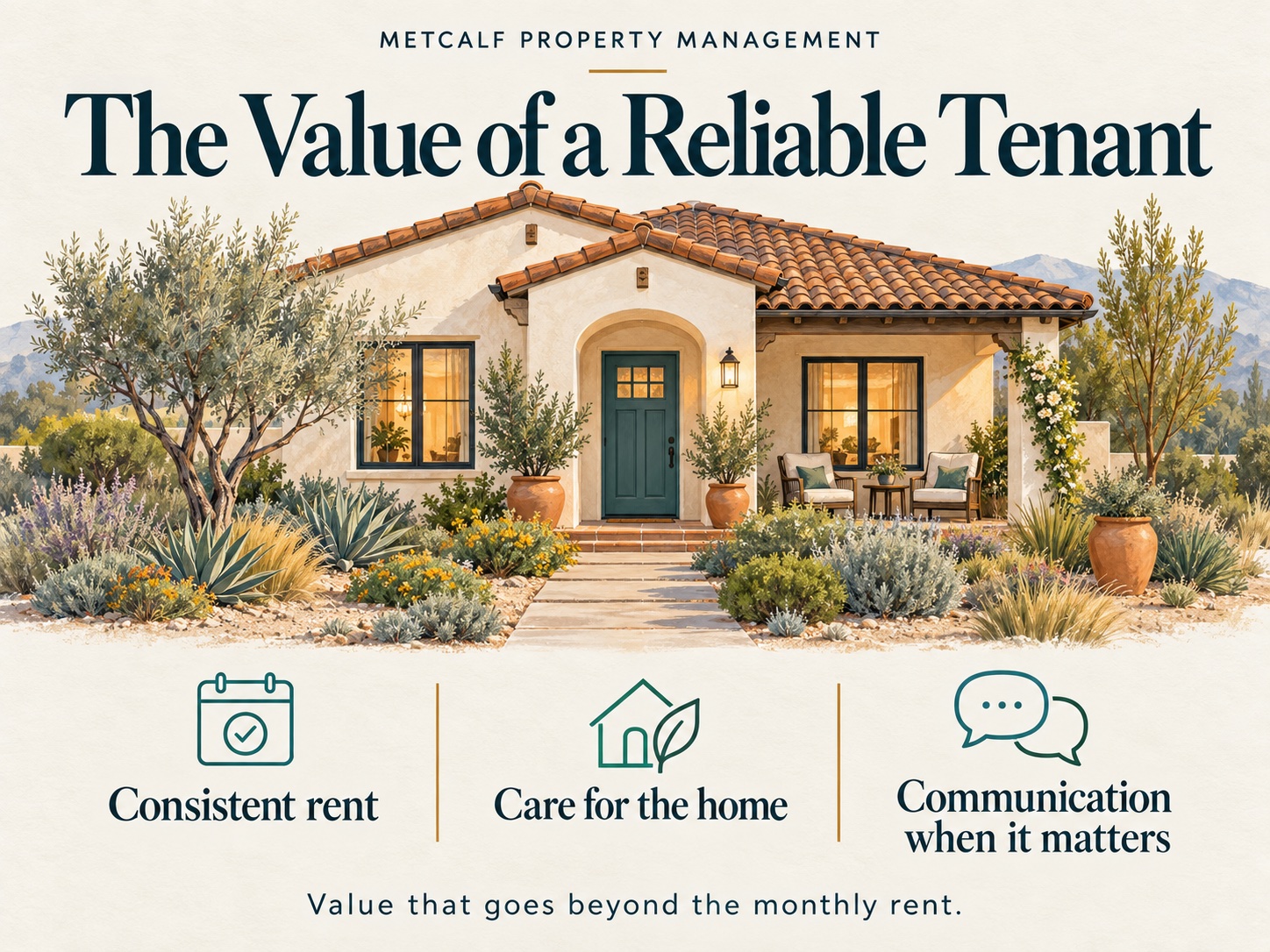
There is value in rent arriving consistently. In someone reporting a leak before it becomes a bigger problem. In a home being cared for and a working relationship built over time.
That value deserves a place in the renewal decision.
Owners need their properties to remain financially sustainable. Tenants need a home that works for their household and budget. A thoughtful renewal considers both, alongside the realities of the local market.
At MPM, we believe the right question is: What decision best supports this property over time?
Sometimes that means adjusting the rent. Sometimes it means investing in an improvement. Sometimes it means recognizing that the reliable tenant already living there is worth keeping.
Contact Metcalf Property Management to discuss your Santa Clarita rental’s renewal options and long-term management needs.
